


Your rates 2026/27
Let's talk about it
Your rates invoice for 2026/27 will start arriving from 2 September 2026 — either in your letterbox or your inbox.
We know rates increases affect people and everyone's household budgets, so we want to be upfront with you about what's changed and why.
This page breaks it all down — what the increase means for you, where your rates money goes, and what help is available if you need it.
What this means for your household
Property rates across Hauraki District have increased by an average of 8.9% for 2026/27.
So what does that look like for you?
For an average residential property, rates have increased by around $210 for the year (that's about $4 a week)
If you're connected to both water and wastewater, your water rates are also increasing, going up by an average of $364 per year (that's about $7 a week).
These are district averages.
If you’d like to know what the change means for your property specifically, we have useful information pages about property rates and water rates or you get in touch at info@hauraki-dc.govt.nz.
Property rates are still paid in two instalments: September 2026 and March 2027
Water rates:
Water rates are billed in either two or four instalments. These dates are staggered depending on when water readings are completed. Our information page on how to pay your rates covers all of your options in detail. If you have questions our friendly team can help.
As a property owner, you also pay regional rates to Waikato Regional Council. These are invoiced separately once a year. Find out more about your regional rates by visiting the information page.
Why are rates going up?
We get it — nobody loves seeing rates go up, especially when everything else seems to cost more too.
We don't take this lightly, and we want to explain what's driving the increase:
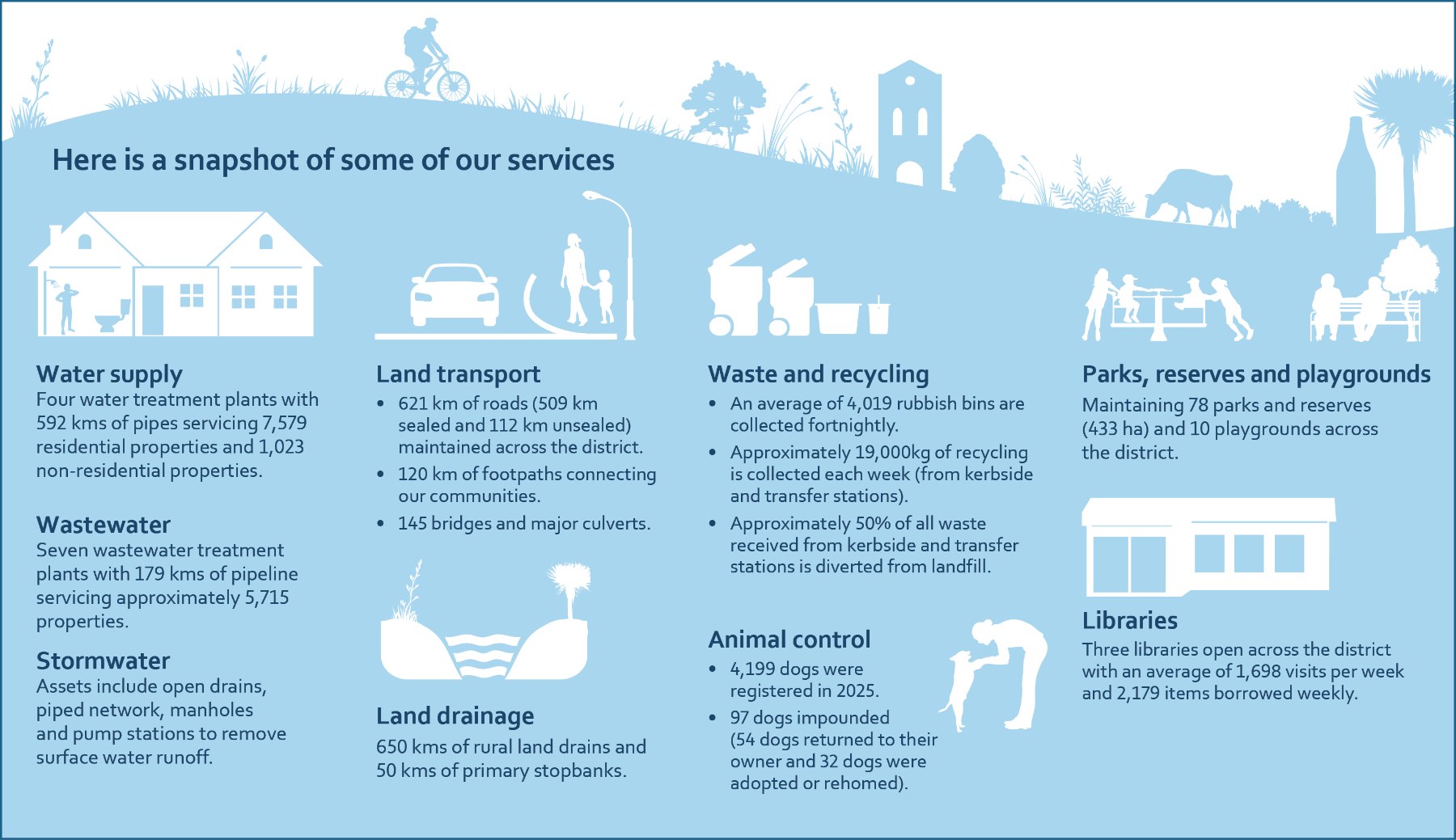
- Roads need more investment — New valuations for cost of renewal and maintenance means our focus is on ensuring 621 km of roads have correct funding to stay safe and usable.
- Fixing footpaths that need addressing — We're accelerating footpath repairs in Paeroa, Waihī, and the Plains. These aren't nice-to-haves — they're about keeping people safe when they're walking around their towns.
- Meeting tougher national water standards — The government's raised the bar on water quality and wastewater treatment. We're doing major upgrades — including a significant investment in the Paeroa wastewater treatment plant — to meet these new requirements and keep our water safe.
- Storm damage and making sure we're ready for next time — The big weather events over the last few years have done serious damage to our infrastructure. We're fixing what's broken and strengthening things, so our communities are better protected.
Everything costs more now — and we mean everything!
Think about your household budget five years ago. The supermarket shop costs more, filling the car costs more, and power bills cost more. Council services aren't immune to those same pressures. The trucks, equipment, electricity, fuel and materials we need to deliver essential services have all increased in cost too.
You've felt it in your own budget.
Since 2021, petrol prices have increased by around 25%, household electricity bills are up around 19%, food prices peaked at annual increases above 12%, and inflation hit more than 8% for some household groups.
Council faces exactly the same pressures.
When fuel costs rise, it costs more to mow parks, run rubbish trucks, and get contractors out to maintain roads and footpaths.
When electricity prices go up, it costs more to heat swimming pools, run libraries and service centres, power water treatment plants, and keep streetlights on.
And when materials get more expensive — pipes, roading supplies, safety equipment, playground parts — those costs flow straight through to council budgets.
Just like your household, we can't avoid these increases — we just have to budget for them responsibly.
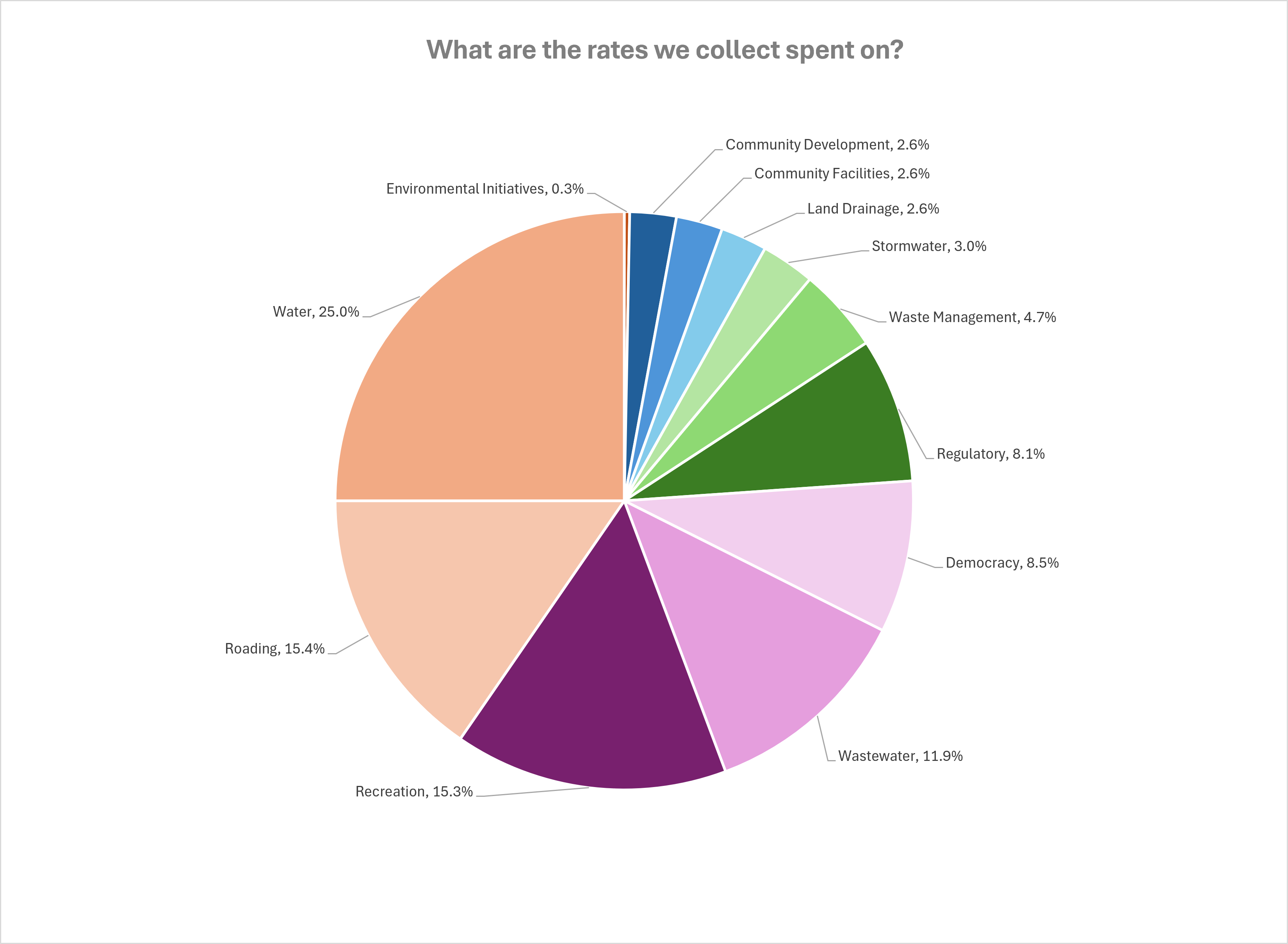
So Where Does Your Rates Money Actually Go?
Your property and water rates pay for the everyday things that keep our district ticking along.
Here's what we're investing in this year:
- Roads and footpaths — Keeping 621km of roads maintained, filling potholes, resealing surfaces, and accelerating footpath repairs in Paeroa, Waihī, and the Plains
- Water and wastewater services — Making sure your drinking water is safe, upgrading the Paeroa wastewater treatment plant to meet stricter national standards, and managing stormwater to protect against flooding
- Parks and recreation — Looking after playgrounds, sports fields, reserves, swimming pools, and the Hauraki Rail Trail
- Libraries and community spaces — Keeping libraries open, maintaining community halls and public facilities
- Rubbish and recycling — Ensuring your weekly kerbside collection, transfer stations are available, recycling services are working
- Looking after our environment — Monitoring water quality, managing environmental compliance, and protecting our natural resources
- Building and planning — Processing consents, making sure buildings are safe, and managing district planning
- Community support — Funding community events, supporting local groups, maintaining public toilets, providing civil defence and emergency management
What this year's investment is really about:
This isn't about adding fancy new things — it's about maintaining essential services, improving safety, meeting stricter water standards, and ensuring that we can meet the true cost of keeping our infrastructure working properly.
We're focused on keeping Hauraki running responsibly, not spending on things that can wait.
When and How to Pay
Rates are still due in two instalments, but we have many different ways to help make things a little easier.
First instalment: Due 30 September 2026, Second instalment: Due 31 March 2027
We recommend paying your rates using Payble. Payble is an easy-to-use tool which lets you pay your rates in one lump sum or in smaller weekly, fortnightly or monthly chunks if that works better for your budget. Find out more about Payble.
Other ways to pay:
- Online via our payment portal
- Set up a direct debit or automatic payment
- Pop into one of our service centres
- Pay by phone using your credit or debit card
- Through your bank (just use your rates account number as the reference)
Your water bill is paid separately. Information about this can be found on our info page.
Need some help? Let's talk about it
If paying your rates is going to be tough, please reach out to us early. We've got options that might help.
Rates rebates
If you're on a low income, you might qualify for a government rates rebate — up to $830 per year. We can help you apply. Just give us a call or check out more on our info page.
If you are worried, we want to work with you. Contact us and let's have a conversation about what support might be available.
Phone:
07 862 8609 or freephone 0800 734 834 (from within the District)
info@hauraki-dc.govt.nz
FAQs
Why is my rates increase different from my neighbour's?
Rates are worked out based on your property's capital value and what services you're connected to (like water, wastewater, and targeted rates). If your property valuation has changed, or you've got different services, your increase might be different from the district average. We have more information about this on our info page.
Can I pay my rates in smaller chunks?
Absolutely. You can set up a payment plan with us, or use Payble to spread it over weekly, fortnightly or monthly payments. Just contact our rates team and we'll sort it out.
What happens if I can't pay on time?
Please get in touch with us as soon as you can. We'd much rather work with you to find a solution than see your account go into arrears. Penalties do apply to overdue rates, so the earlier you talk to us, the better.
How do I apply for a rates rebate?
It's easy, you can visit our information page, download the application form, complete it and then send it back to us. If you have any questions, give us a call on or visit one of our offices. We're happy to help you through the application.
Why are Hauraki rates higher than the national average?
Our 8.9% increase is above the 6.9% national average because of the specific challenges we're facing here in Hauraki. The biggest pressure is roading — updated valuations showed that renewing our roads costs way more than what we'd been budgeting for.
Add to that the accelerated footpath repairs, major water infrastructure upgrades to meet new national standards (including the Paeroa wastewater treatment plant), and storm recovery work — these are costs we can't put off any longer without risking serious problems.
Our residential rates in the Hauraki district are below the national average for provincial councils - it's just this year the increase is higher than the average increase throughout New Zealand.
Where can I see exactly how council is spending my money?
Our 2026/27 Annual Plan has detailed breakdowns of all our spending by activity. And if you want to know something specific, just ask — we're here to answer your questions.
Can I give feedback about rates or how council spends money?
Yes, we would love to hear from you.
We formally consult on our Long-Term Plan every three years and our Annual Plan each year. But honestly, you can contact councillors or council staff with feedback anytime. We want to hear from you — your input genuinely matters.
Still got questions?
If there's anything you want to know about your rates invoice, or just want to talk it through with someone, we're here.
Get in touch:
- Phone:
07 862 8609 or freephone 0800 734 834 (from within the District) - Email:
info@hauraki-dc.govt.nz


